BYE-BYE BABAR: To be or not to be(long)?
- odamisal
- Oct 10, 2024
- 7 min read
Updated: Oct 17, 2024

"Were you to ask any of these beautiful, brown-skinned people that basic question – ‘where are you from?’ – you’d get no single answer from a single smiling dancer. This one lives in London but was raised in Toronto and born in Accra; that one works in Lagos but grew up in Houston, Texas."
This one grew up in Port Harcourt, Nigeria for the first 10 years of her life before being exported to Kenya for boarding school. After 5 years, she started a new life in the UK to complete her IB diploma and now, she lives in the heart of Los Angeles, 8 hours behind her family in Lagos and thousands of miles - or kilometers (depending on who you ask) - away from her childhood friends.
"‘Home’ for this lot is many things: where their parents are from; where they go for vacation; where they went to school; where they see old friends; where they live (or live this year)."


As someone who has moved around a lot in her 21 years on this earth, I have struggled to mesh perfectly with any one cultural identity, to fit the "who are you?" question into any neat little box. Because of my diverse cultural background, I often feel like I am only partially understood, because I am only partially seen.
Taiye Selasi's Bye-Bye Babar was a distinct moment where I felt fully seen. In this short essay, Selasi describes what it means to be an "Afropolitan", a portmanteau of African and cosmopolitan. As she delves into the complex hybridities that make up globalized Africans, she is able to grasp their often slippery boundaries of self.
I was assigned this essay in a comparative African literature class I took in the Spring of 2023. I remember sitting on the uncomfortable wooden chair in my dorm room, a sophomore suffering from a senior-itis who was just trying to get her homework over and done with - but from the first paragraph, I was floored. Selasi had read me inside-out. She had managed to give visibility to my obscurities, and language to the parts of myself I had long since given up trying to explain.
It was an existential awakening.
"There is at least one place on The African Continent to which we tie our sense of self: be it a nation-state (Ethiopia), a city (Ibadan), or an auntie’s kitchen. Then there’s the G8 city or two (or three) that we know like the backs of our hands, and the various institutions that know us for our famed focus."
Growing up in Nigeria, that was at first all I'd ever had to call home. That is where my parents, and their parents, and their parents, are from. It was Port Harcourt with my parents and brothers, or Lagos with my cousins, or Benin with my grandparents. If asked "where are you from?" way back when, my answer would have been simple.

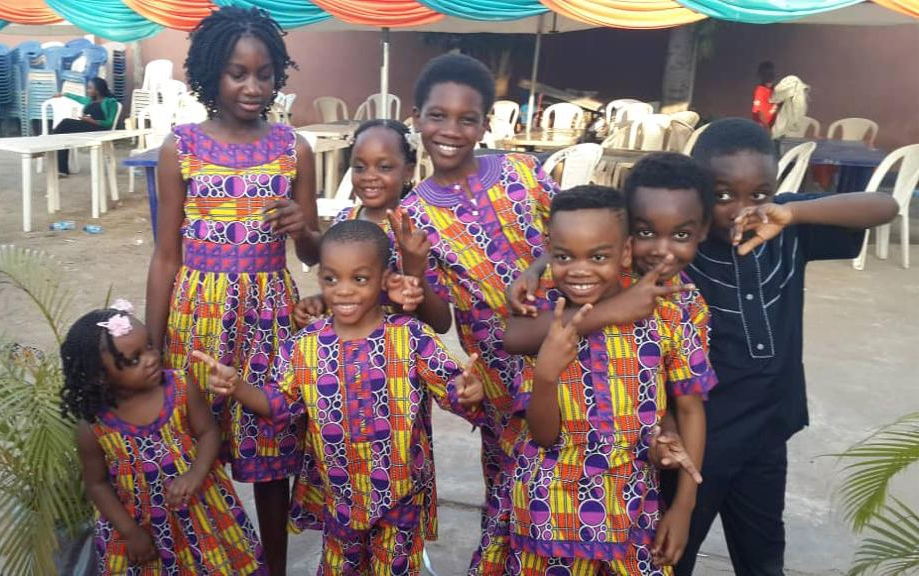
But after spending 5 of my formative years in Kenya, wearing their handmade bracelets, adopting their accent and mannerisms, and assimilating to their way of life, the response to this question grew more complicated. All of a sudden, when I would go back home (where I now only spent the holidays; approx. 3 months a year), I was "not Nigerian enough". As if my Nigerian-ness was a drink to be diluted.
"Whether we were ashamed of ourselves for not knowing more about our parents’ culture, or ashamed of that culture for not being more ‘advanced’ can be unclear........ most were once supremely self-conscious of being so ‘in between’."
Fast forward to 2019: I start sixth form (the equivalent of 11th and 12th grade here in the US) in the UK, outside of the African continent for the first time. In an international school filled with students from all over Europe and Asia who had spent their entire lives up til that point in their home countries, and whose first languages were their mother tongues, I felt intimidated.

Here, I am pictured with my Italian, French, Deutsch, Belgian, Russian and Chinese friends. Everyone seemed to be so firmly rooted in their cultural identities, so sure of who they were. And on the other hand, there was me, flailing between two half-cultures and still not feeling whole. As one of two Black Africans in the entire school, I constantly felt hyper-visible and at the same time, completely invisible - what Selasi describes as being caught in the "in between".
When I moved to the U.S. for college in 2021, I quickly learned that I was no longer a Nigerian girl but a Black girl. My race was the first thing (and sometimes the only thing) that people saw.
"Brown-skinned without a bedrock sense of ‘blackness,’ on the one hand; and often teased by African family members for ‘acting white’ on the other – the baby-Afropolitan can get what I call ‘lost in transnation’."
Whereas my teachers and fellow students in England were fascinated by my braids and in awe that I "spoke such good English!", my American peers were more politically correct about my exotic curiosities. "Oh, you're Nigerian? My cousin's boyfriend's roommate did some volunteer work in Zimbabwe last summer!" ... Never mind that I didn't know the first thing about Zimbabwe.
It seemed like even though I was unable to categorize myself, everyone else seemed intent on boxing me in anyway.
"We are Afropolitans: not citizens, but Africans of the world."


While having such a diverse background could be seen as a blessing, for a good chunk of my life, I believed it to be more of a curse. I found myself being too much in certain spaces, and not enough in others; a visitor of Everywhere but a citizen of Nowhere.
(I <3 California though. Wouldn't mind being a visitor all day everyday with these gorgeous sunsets as my view.)
I was not African

enough for Nigerians, and yet not Black enough for African-Americans. My English is shrouded in a stubborn foreignness that makes it hard for people to understand me here; yet I don't speak my native tongue so it is impossible for me to understand people there. The fact that I am from another country is "so cool!" to Americans but in Lagos, the reality that I go to school abroad and have an escape from the country's endless problems is a tense point of envious admiration and betrayal.
My family jokes that I am too "Americanized" and yet I was not quite American enough when I first got to UCLA. I remember being teased that I called the elevator the "lift", corrected when I called the trunk the "boot", and 'huh?ed' for calling the optometrist the "optician". Turns out all the American TV I grew up watching did not overpower my teenage socialization in the UK.
I think this idea of getting "lost in transnation" perfectly encapsulates these experiences.

"Perhaps what most typifies the Afropolitan consciousness is the refusal to oversimplify; the effort to understand what is ailing in Africa alongside the desire to honor what is wonderful, unique. Rather than essentialising the geographical entity, we seek to comprehend the cultural complexity..."


What Selasi's essay freed me to believe is that maybe I don't need a box at all. Maybe I can trample the whole darn box and throw it away altogether. Maybe I could get comfortable in the maybe's.
Perhaps what I thought was a tightrope between irreconcilable cultures could in fact be a bridge between diverse worlds, understandings and possibilities.
UCLA has been the perfect nurturing ground for me to express my internationalism on all fronts: food, music, dance, poetry, conversation, travel, and in no small part, academics!
"Where our parents sought safety in traditional professions like doctoring, lawyering, banking, engineering, we are branching into fields like media, politics, music, venture capital, design."
Recently, someone asked me why I get so excited and passionate talking about my minors (Professional Writing, Education), yet I seem to lack that same energy for my major (International Development). The short answer is: in what world can I tell my Nigerian parents who are pouring thousands of dollars into my UCLA education, that I want to major in English!? It is completely unheard of in African culture LOL.

(Mind you I never said I wanted to work in the UN... I know they mean well, though <3 hahaha)
Yet even within the confines of my interdisciplinary major, I have been blessed with the flexibility customize my electives and immerse myself in classes I truly care about (such as the comparative literature class that led me to Selasi's essay in the first place!). And of course, I have my minors <3
I believe that in addition to allowing cultural identity to transcend geography, Afropolitanism is also about allowing our imagination to transcend the familiar, the same old same old. It is about pushing boundaries and challenging the status quo and "redefining what it means to be an African".
"Without that intrinsically multi-dimensional thinking, we could not make sense of ourselves."
As a senior who is increasingly being asked the "what's next for you?" question, these revelations are something that bring me comfort. Each move to a new country has been somewhat unanticipated and scary, but the outcomes have always been rewarding. So whether it is "Brixton, Bethesda, Boston (or) Berlin", I welcome the next adventure with open arms!

Life is constantly demanding that we under-complicate our (beautiful) complications and Bye-Bye Babar reminded me that not only is it okay to not have simple, digestible answers to all the questions; it can actually be something to celebrate!
So maybe this blog post helped you get to know me a little better. Or maybe you feel even more so that you do not know me at all.
Either way, thank you for sticking around all the way through! <3 If you are interested in checking out Selasi's essay, just click on the first image on this post. I promise you it's not even half as long as this blog ;)
Index
*aso ebi: literally, "family cloth" in Yoruba; used to describe the outfits from the same cloth/same design that families wear on special occasions such as birthdays, weddings and funerals.


This was really really good Dami. I’m happy you got a chance to pour out the thoughts you never knew how to voice!!! I’ve always enjoyed reading your work. So proud ♥️
Hey! First off, this was a lovely post and an absolute treat to read. I really enjoyed how you critically engaged with Selasi's essay to reflect on your own personal experience. As someone who has had the opposite experience as you (I am born and raised Southern California and second generation Mexican American), I was really enthralled to hear your experiences growing up in different areas of the world. There was a strong sense of self-discovery throughout the piece that even made me optimistic to see where you will go after Los Angeles! I think you have a very magnetic style when writing, and that rang through very well. Even as just a classmate of yours, I was invested in…
What an amazing first piece. At the end of your post, you asked if having read this, we as readers felt like we knew you more - I can certainly say that I think I know you a lot more. The way you narrativized your life within the context of Selasi’s essay made me feel like a fly on the wall, following you across the globe. I love that you connected so many different eras over the last 21 years to different parts of the essay; I did something similar, not over such a large period only the last two years lol, in my blog :) I also would have never thought to intersplice the post with quotes from the…